A field guide to garage door noises
Stand inside the garage, well clear of the door, and run it once while you listen. Try to notice two things: what kind of sound it is, and where on the door it’s coming from. Then find it below.
| The sound | Where it’s from | Likely cause | How worried to be |
|---|---|---|---|
| High-pitched squeak or squeal | Sides of the door | Dry roller bearings or hinge pivots | Low. Lubricate and see. |
| Rhythmic clicking or ticking | Sides, as each section passes the curve | A roller with a flat spot or a cracked wheel | Low to moderate. Replace the roller. |
| Grinding, metal on metal | Track | Seized roller sliding instead of rolling, or the door rubbing the track | Moderate. It’s wearing the track. |
| Rattling or clattering | All over | Loose hinges, track bolts, or brackets | Low. Tighten the hardware. |
| Popping or creaking | Above the door | Torsion spring coils binding as they wind | Low if lubrication cures it. Worth watching if not. |
| Single loud bang | Above or beside the door | A spring breaking | High. Stop using the door. |
| Thump when the door lands | Floor | Door out of balance, or close limit set too low | Moderate. Springs or opener need adjusting. |
| Scraping or rubbing | One side | Door shifted sideways, cable trouble, or bent track | Moderate to high |
| Chain slap | Opener rail | Loose drive chain | Low. Adjust tension. |
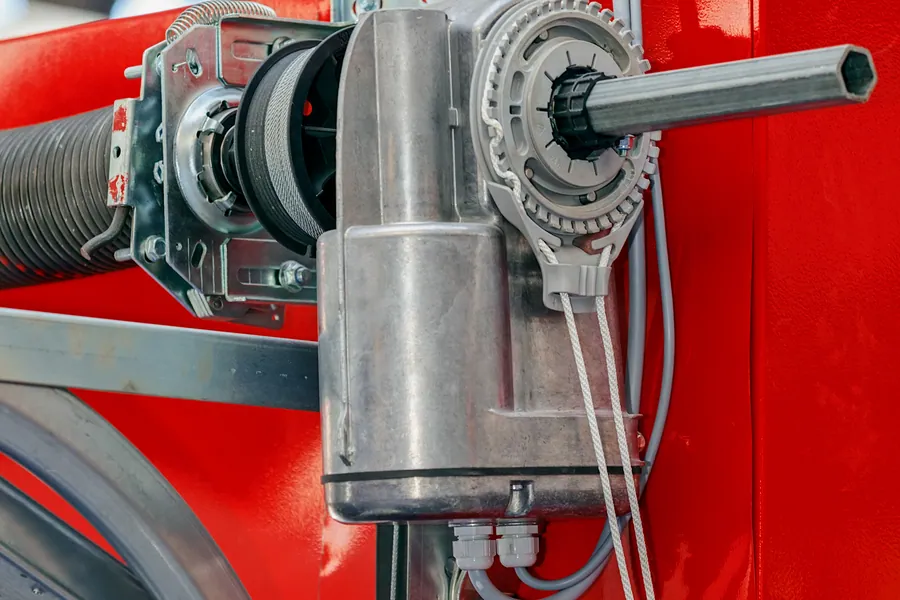
| Grinding or whirring with a slow or stalled door | Opener motor housing | Worn drive gear | Moderate. The opener will fail soon. |
| Low vibration or hum through the house | Ceiling and walls | Opener vibration carried by rigid mounting | Low. It’s an annoyance, and it can be fixed. |
| Squeal just as the door starts to move | Bottom corners | Bottom seal stuck to the floor, or dry bottom rollers | Low, but don’t force a frozen door |
Try this first
About half of noisy doors can be quieted with ten minutes and a can of the right lubricant.
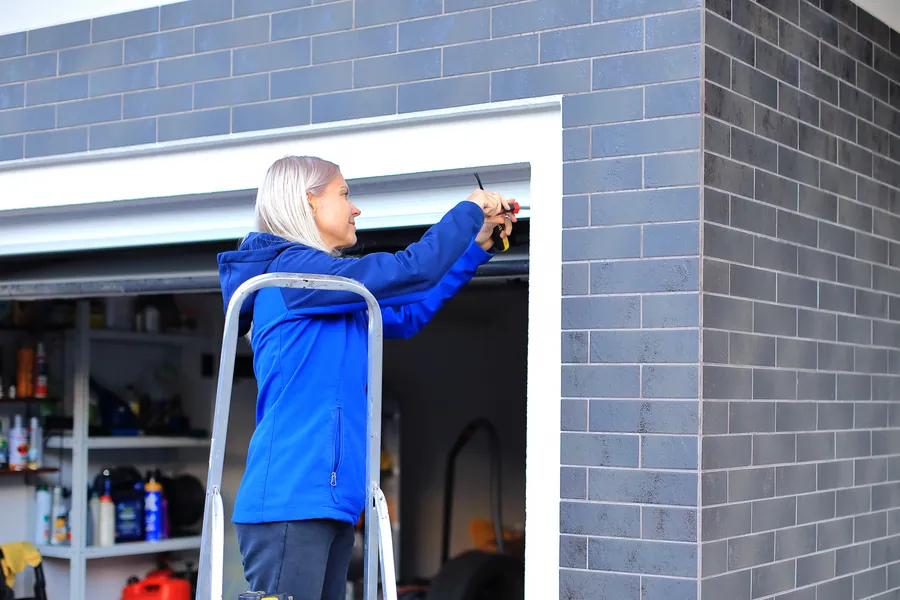
- Tighten what’s loose. With the door closed, go over the hinge bolts and track bracket bolts with a socket wrench. Snug, not gorilla tight. Leave the bottom brackets and anything painted red alone.
- Lubricate the hinges. A short spray at each pivot point.
- Lubricate the rollers. Aim at the bearing where the wheel meets the stem. Nylon rollers with sealed bearings don’t need it.
- Lubricate the springs. A light pass along the full length of the coils. Wipe drips.
- Lubricate the bearing plates. One at each end of the spring shaft, and one in the middle on two-spring doors.
- Leave the tracks alone. Wipe them clean. Grease in the track makes rollers slide, which is noisier.
- Run the door a few times to work the lubricant in, then listen again.
Use a garage door lubricant, silicone or lithium-based. A general-purpose penetrating spray will quiet things for a week and then leave them drier than before.
If the door is noticeably quieter, good. Put a reminder in your phone to repeat it in six months. If it isn’t, or the noise is on the “moderate” or “high” rows of the table, read on.
The usual culprits
Rollers
Builder-grade doors typically ship with plain steel rollers, sometimes with no bearings at all. They work, loudly, and after some years the wheel loosens on its stem or the bearing seizes. A seized roller doesn’t roll. It scrapes down the track every cycle.
Replacing them with nylon rollers on sealed ball bearings is the most effective noise upgrade there is for the money. The difference is obvious the first time the door moves. Most rollers can be changed with the door in place. The bottom pair are held by the bottom brackets, which are under spring tension, so those are a job for us.
Hinges
Each hinge is a pivot that moves twice per cycle. Over time the pin wears the hole into an oval, and the hinge starts to click and shift. You’ll sometimes see fine metal dust or a gray streak below a worn hinge. Hinges are inexpensive, and replacing the worn ones tightens up the whole door.
Springs
Torsion spring coils rub against each other as they wind and unwind. Without lubricant, they creak, pop, and twang. That’s mostly harmless noise, though it does mean the coils are wearing on one another. Lubrication cures it.
A spring that’s noisy even after lubricating, or a door that has also started to feel heavy, points to a spring near the end of its life. See spring repair.
Bearings
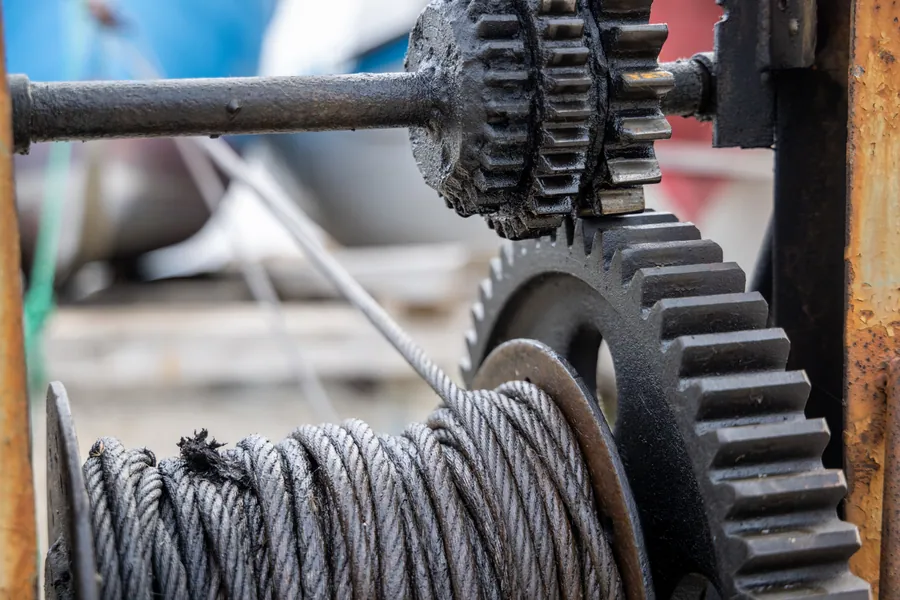
The spring shaft turns in bearings at each end and in the center. A failing bearing makes a grinding or grating noise from above the door, and you may see dark dust around it. Left alone, it can seize and damage the shaft.
Track
Track itself is silent. It becomes noisy when the door rubs against it, when a joint between the vertical and horizontal pieces is misaligned so rollers bump across it, or when the rear hangers are flimsy and the whole assembly shakes. Our track repair page goes into this.
An unbalanced door
When springs lose tension, the opener has to work harder. The motor labors, the rail flexes, the door shudders as it starts and lands with a thump. It sounds like an opener problem. It’s a spring problem.