A quick tour of the track system
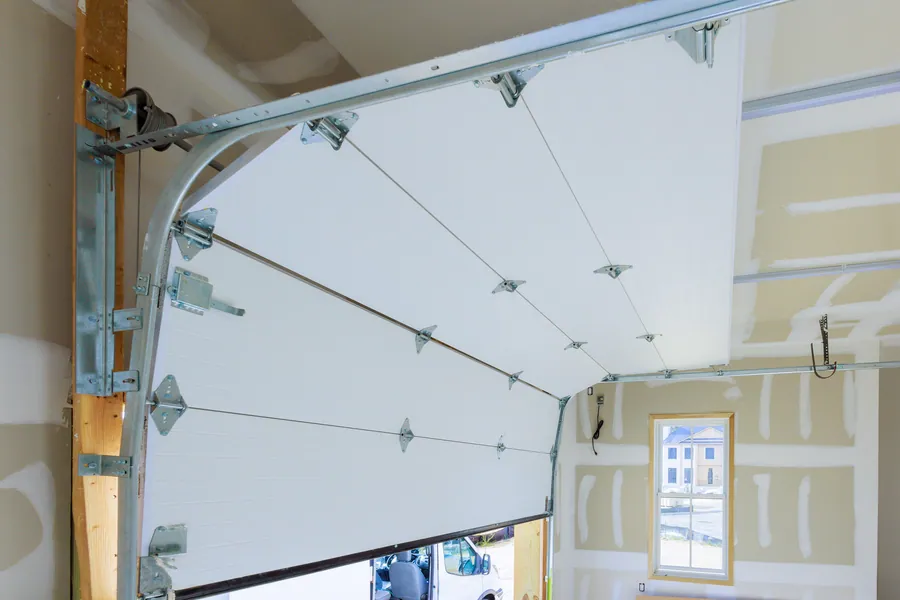
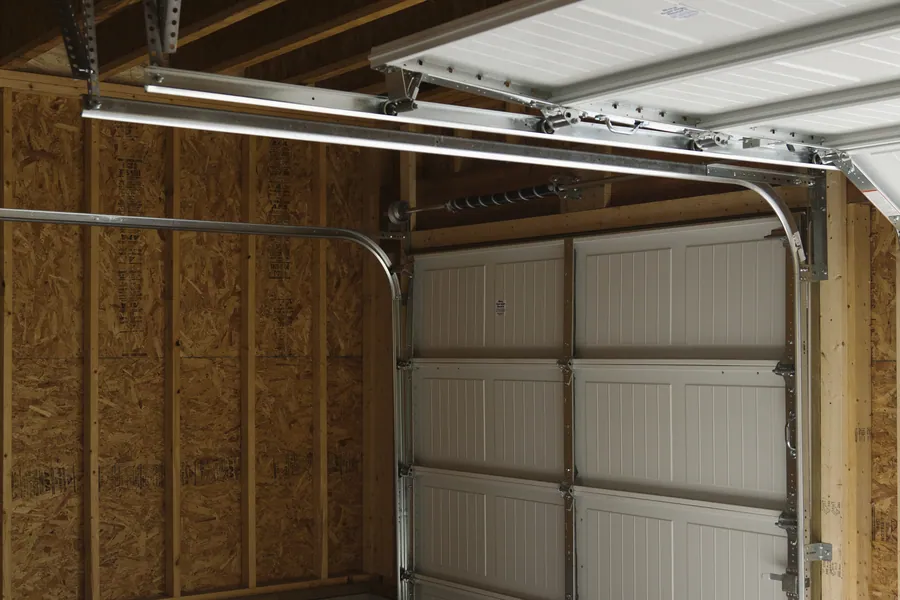
Each side of a standard residential door has three pieces of track.
The vertical track runs up the door jamb from the floor to just above the opening. It’s fastened to the jamb with a row of brackets and tilts very slightly away from the door toward the top, so the door seals tight when it’s closed and frees up as it starts to rise.
The radius is the curved piece that turns the door from vertical to horizontal. Residential doors mostly use a 12 or 15 inch radius.
The horizontal track carries the open door. It bolts to the top of the vertical track at a flag bracket and is hung from the ceiling framing at the back with steel angle.
Rollers on the door’s edges ride inside all three. For the door to move freely, the left and right tracks have to be parallel, plumb, the right distance apart, and level with each other across the garage. That’s a lot of things that can drift.
Signs your tracks need attention
- The door rubs against the track or the stop molding on one side
- There’s a visible gap between the rollers and the track on one side, and none on the other
- The door shudders or pauses at the same point every cycle
- You hear a scraping or a metallic pop as the door passes the curve
- A roller has come out of the track
- The door sits crooked in the opening even though the cables look fine
- You can see a kink, flat spot, or twist in the track itself
- The horizontal track sways when the door is moving
Any roller out of the track is a stop-now situation. The door is supported by the remaining rollers, and running it can pull those out too.
What knocks tracks out of line
A bump from a vehicle
The lower vertical track sits at bumper height, a few inches from where you park. It doesn’t take much. Often the driver doesn’t even notice the tap, and the first sign is a door that starts binding a week later.
Loose fasteners
Track brackets are lagged into the wood jamb. Decades of vibration, plus wood that swells and shrinks with our humid summers and dry winters, work those lag screws loose. A track that can shift a little will, every cycle, until it’s far enough out to cause trouble.
Weak rear hangers
The back of the horizontal track should be hung on rigid steel angle with a diagonal brace. We still find tracks hanging from thin perforated strap or even from wire. Those let the track sway, and a swaying track lets rollers climb out.
A door closed on something
When the door comes down on an object on one side, that side stops and the other keeps going. The door racks, and the force goes straight into the track and rollers.
A broken cable or spring
If one cable lets go, the door drops on that side and jams diagonally in the tracks. The track often bends where the top roller wedges against it. See our cable repair page for more on that failure.
Settling
Garage slabs and framing move. In Franklin’s clay-heavy soils, frost heave can lift one side of a slab enough over the years to throw the vertical tracks out of plumb with each other.
Straighten or replace?
Track is roll-formed steel, and its strength comes from its shape. That’s what guides the decision.
| Condition | What we do |
|---|---|
| Track is sound but has shifted | Loosen, realign, re-anchor. No new parts needed. |
| Slight bow or spread in the vertical track | Often corrected with a track anvil and mallet, then re-secured |
| Sharp kink or crease | Replace that piece. A kinked track never runs smoothly, and the kink is a weak point. |
| Flattened or crushed curve | Replace the radius or the whole horizontal assembly |
| Rust-thinned bottom of vertical track | Replace. Common on older doors near the floor. |
| Track too light for the door | Replace with heavier-gauge track suited to the door’s weight |
Tracks are replaced in matched sets when the profile or radius has to change, so the door runs the same on both sides.