First, a word about terms
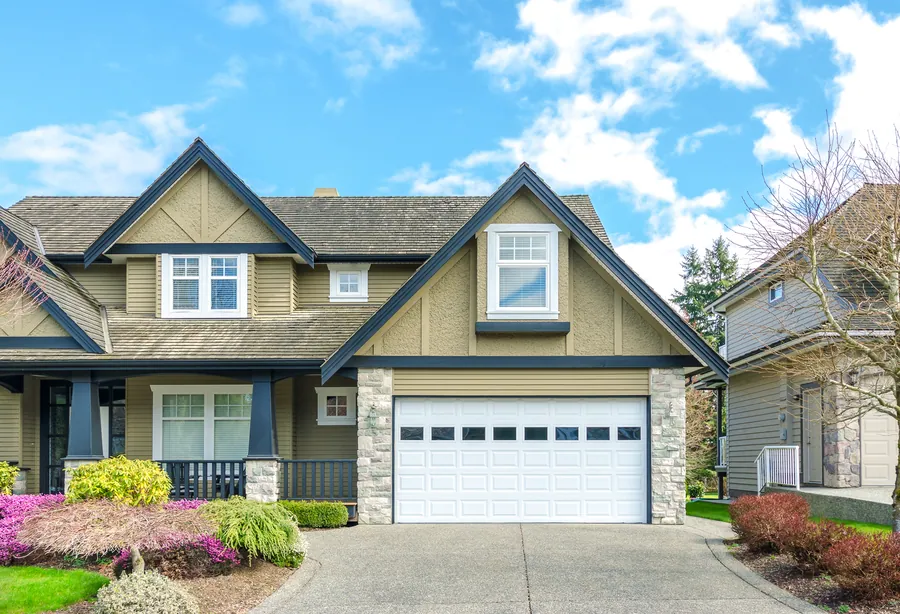
People use “panel” and “section” for the same thing, and so do we in conversation. Strictly speaking, a garage door is made of horizontal sections, usually four or five, hinged together. Each section may be stamped with several raised or recessed panels. When someone says a panel is dented, they usually mean one section has damage.
This page is about repairing a damaged section in place. If the section is past saving and needs to be swapped for a new one, that’s covered on our section replacement page.
Cosmetic or structural?
That’s the question that decides everything. Here’s how we sort it.
| Type of damage | What it looks like | Can it be repaired? |
|---|---|---|
| Shallow dent | A soft dish in the face, no sharp edge, paint intact | Often, yes. May be improved from behind or filled and refinished. |
| Sharp crease | A line or fold across the steel | Rarely made invisible. The steel has stretched. Can be reinforced if the section is still straight. |
| Bowed section | The whole section curves inward or outward when the door is up | Yes, usually. A strut across the back pulls it straight and keeps it there. |
| Cracked stile | A split in the vertical rib where a hinge mounts | Sometimes, with a repair plate. If several stiles are cracked, replace the section. |
| Torn top section | Steel ripped around the opener bracket | A reinforcement bracket can rescue it if caught early. |
| Rust-through | Holes or flaking along the bottom edge | No. Patches don’t last. That section needs replacing. |
| Wood rot or split | Soft, swollen, or separating wood | Small areas can be repaired and sealed. Widespread rot means replacement. |
The short version: dents you can live with are a choice. Damage that affects how the door moves, or where hardware attaches, is not.
How we repair steel sections
Working a dent out
On single-layer steel doors, the back of the panel is accessible. A shallow dent can sometimes be eased out from behind with a block and a mallet, working from the edges toward the center. It takes patience, and the result depends on the steel. Thin steel that has been stretched won’t go perfectly flat again.
Insulated doors are harder. On a two-layer door, the foam board can sometimes be pulled back to reach the skin. On a three-layer sandwich door, there’s steel on both sides and foam bonded between, so there’s no getting behind it. For those, the choices are filling and refinishing, living with it, or replacing the section.
Filling and refinishing
For dents where the paint is damaged, auto-body methods apply. The area is sanded, filled, primed, and painted to match. On a smooth-faced door in a common white or almond, a careful repair is hard to spot. On a wood-grain embossed finish it’s more difficult to hide, and we’ll tell you that up front.
Reinforcing with struts
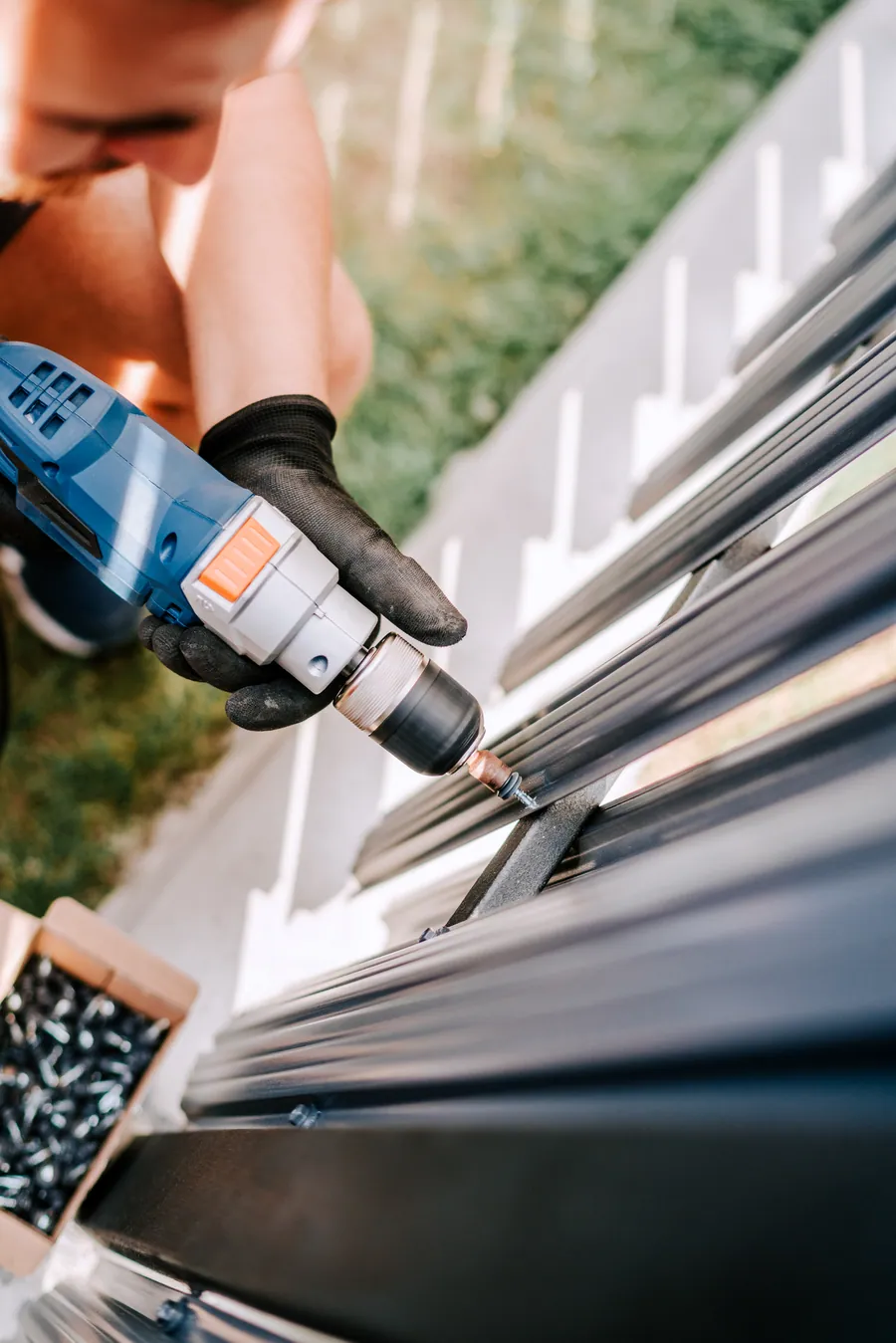
A strut is a length of formed steel that bolts horizontally across the back of a section. It’s the most useful repair part we carry for panel problems. A section that has started to bow or flex, especially the top one that takes the opener’s push and pull, can be pulled straight and held there. Wide doors without enough struts are a common find on builder-grade installations around Franklin. Adding one or two is inexpensive and adds years.
Repairing hinge and bracket points
Where a stile has cracked or screw holes have stripped, a steel repair plate spreads the load across sound metal. This works well when one or two points are affected. If the stiles are splitting at every hinge, the section has fatigued and it’s replacement time.
The top section and the opener
A lot of “panel damage” calls turn out to be the top section, bent where the opener arm connects. It’s rarely caused by an impact. What happens is this: the door gets heavier to move, from tired springs or a frozen bottom seal, and the opener keeps pushing. The thin steel of the top section gives before the motor does.
If the section has only begun to flex, a full-width strut and a proper opener reinforcement bracket will save it. If it’s torn or deeply creased, it needs replacing. Either way, the cause has to be fixed too, or the new section will go the same way. That usually means a look at the springs. See spring repair for what’s involved.