Franklin, WI and nearby

Tell us about the door

A few details are enough to get started. We'll follow up to confirm what you need and when we can come out.

We use these details only to reply to your request.

Openers

Garage Door Opener Repair in Franklin, WI

When the button stops working, the opener gets the blame. About half the time it deserves it. We sort out which half you’re in, then fix what’s actually wrong.

(000) 000-0000
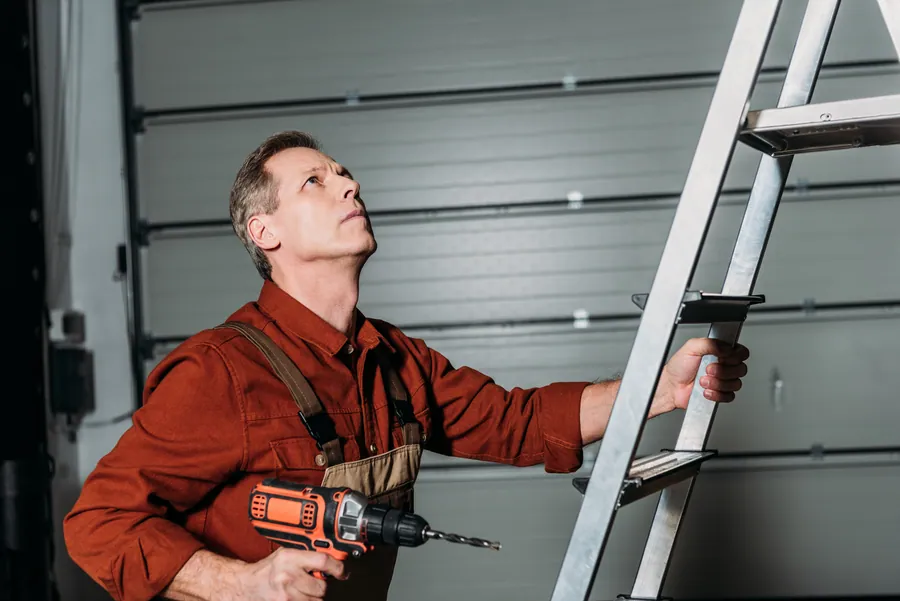
Technician with a cordless drill and ladder beside a garage door
First test
Lift the door by hand
Common fix
Sensor alignment
Works on
Chain, belt, screw and wall-mount units

Five minutes of troubleshooting you can do yourself

Before you call anyone, a few checks are worth doing. They cost nothing, and a fair number of “broken” openers turn out to be one of these.

  • Is it getting power? Check that the unit is plugged in and that the outlet works. Garage ceiling outlets are often on a GFCI that has tripped somewhere else in the garage.
  • Is the wall button locked? Many wall controls have a lock or vacation switch that disables the remotes. It gets bumped more often than you’d think.
  • Do the sensors agree? Look at the two small photo-eyes near the floor on either side of the door. Each has an indicator light. Both should be steady. A blinking light means they’ve lost sight of each other.
  • Is the remote battery dead? If the wall button works and the remote doesn’t, start here.
  • Has the release been pulled? If the motor runs and the door stays put, the trolley may simply be disconnected. Run the opener until it clicks back in, or re-engage it by hand.

Still stuck? Then it’s a job for us, and the notes below will help you describe it.

What the symptoms usually mean

  • Motor hums, door doesn’t move Often a broken door spring, not the opener. On older units, it can also be a failed start capacitor or stripped drive gear.
  • Door closes, then goes right back up Sensors out of line, something in the beam, or the down limit set past the floor so the opener thinks it hit an obstacle.
  • Door reverses partway down Binding in the track or a door that’s out of balance. The opener senses the extra force and backs off, as it’s designed to.
  • Works from the wall, not the remote Battery, a remote that needs reprogramming, or interference. Certain LED bulbs in or near the opener can cut remote range.
  • Clicks, lights flash, nothing else The lights are usually a code. The count of flashes points to sensors, travel, or a board fault.
  • Runs, grinding noise, door stays still On chain and belt units, the nylon drive gear inside the housing has worn away. You may see white shavings on top of the unit.
  • Opens by itself or at random A stuck button on a remote or keypad, a shorted wall-control wire, or on very old units, a neighbor on the same code.
  • Slower and louder every winter Thick grease, a dry rail, and a door that needs more push in the cold than the opener was set for.
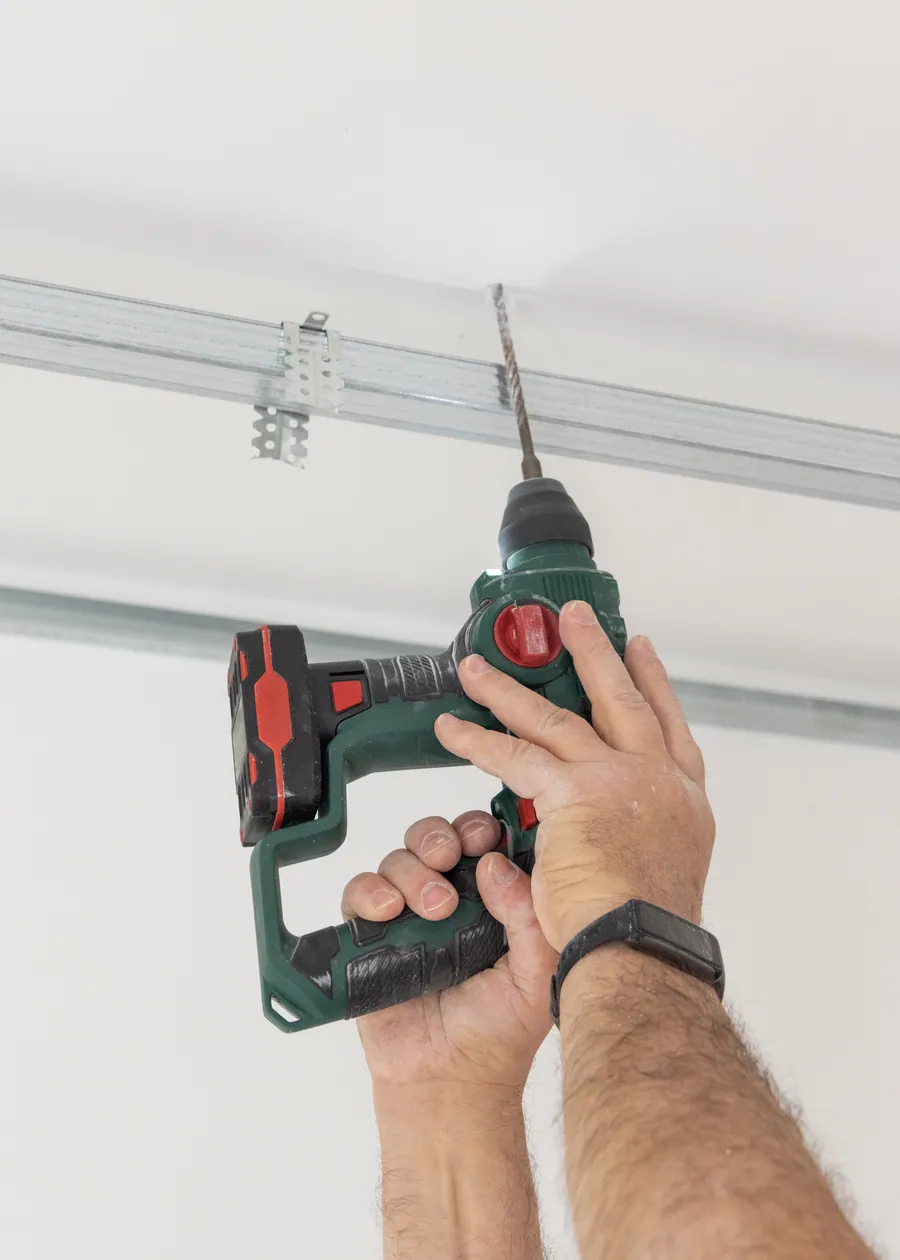
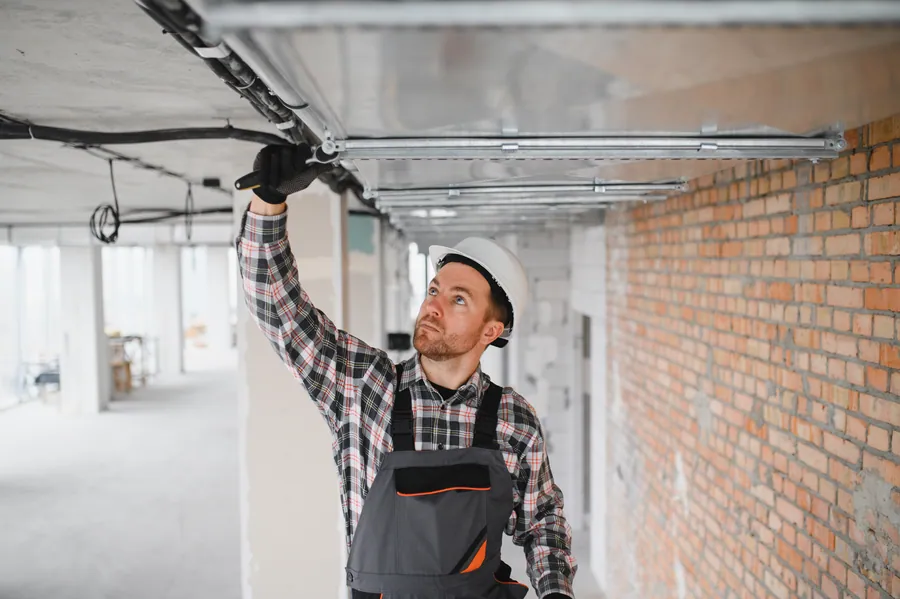
Hand using a cordless drill on a ceiling-mounted rail bracket
Reference photo: hand using a cordless drill on a ceiling-mounted rail bracket.

We always test the door first

This is the part that separates a repair from a guess. With the opener disconnected, we lift the door by hand. If it’s heavy, sticks, or sits crooked, the opener has been fighting it for a while and whatever failed inside the motor is a result, not the cause.

Fixing the opener without fixing the door gets you a few more months at best. So if we find a weak spring or worn rollers, we’ll show you, and deal with that alongside the opener. Our garage door repair page explains how that side of things works.

Parts we repair and replace

Safety sensors. Realigned, rewired, or replaced. The wire runs along the wall and gets stapled through, nicked by lawn tools and chewed by mice more than you’d expect.

Drive gears and sprockets. The classic repair on chain and belt openers of a certain age. The motor is fine, the gear is gone. A rebuild kit puts it back in service.

Logic boards. Power surges and nearby lightning are hard on circuit boards. A dead board can often be replaced, and we recommend a surge protector at the outlet afterward.

Capacitors. If the motor hums and can’t start, sometimes this small part is the reason.

Belts and chains. Stretched chains get adjusted, damaged belts replaced. A chain that’s slapping the rail is too loose.

Trolleys and rails. The carriage that rides the rail can crack or wear. Bent rails get replaced.

Travel and force settings. Not a part, but a frequent fix. Limits drift, and force settings left too high are a safety problem.

Remotes, keypads, and wall controls. Reprogrammed, replaced, or added. If you’ve bought the house recently, clearing the opener’s memory and reprogramming your own remotes is a sensible security step.
Before and after

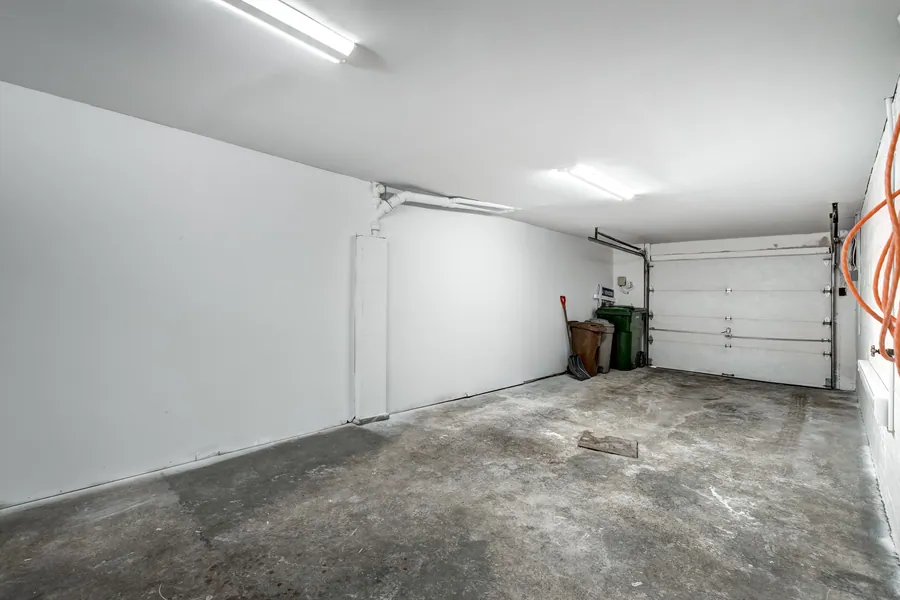
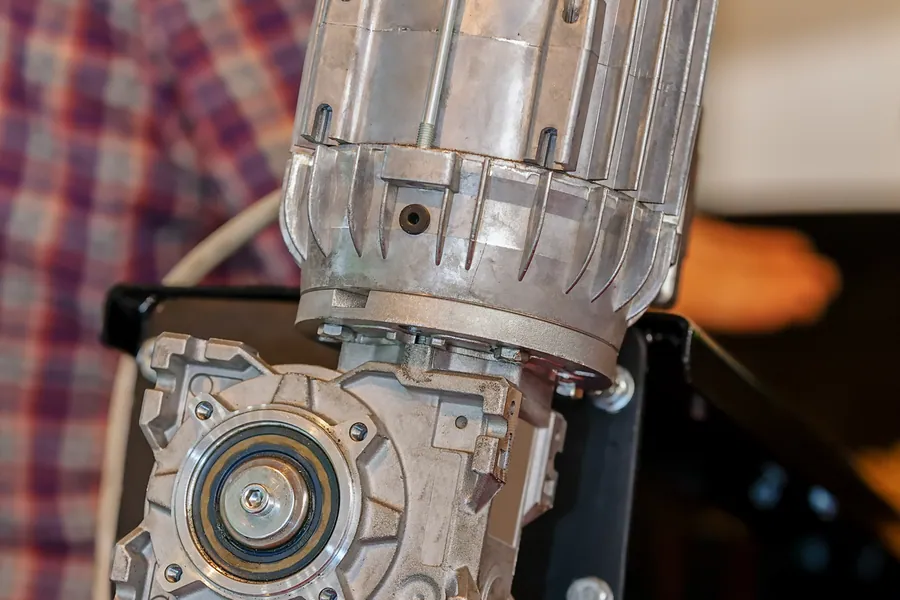
A worn opener motor and a garage with its opener back in service

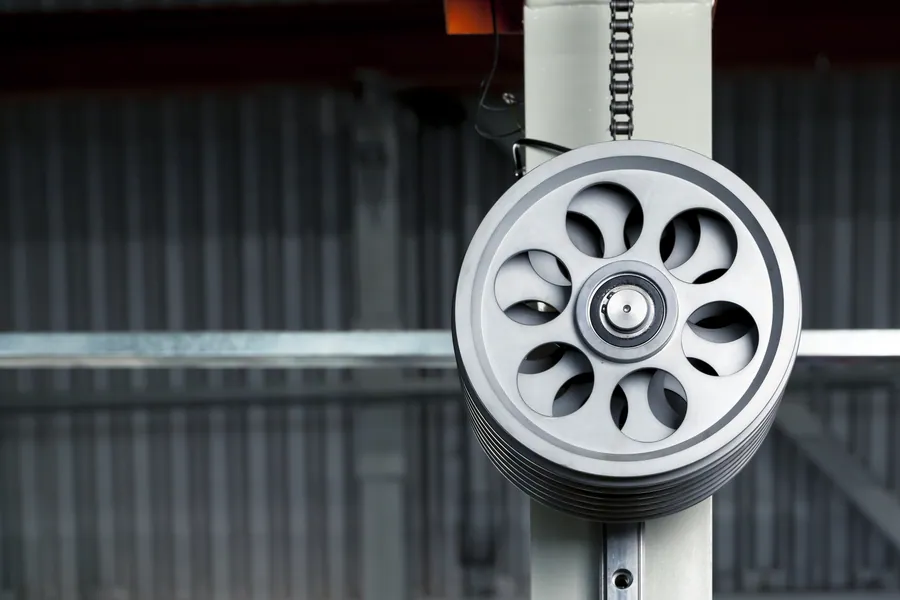
The before image shows an electric gear motor pulled from service for inspection. This is the heart of an opener: a motor driving a reduction gear. When the gear wears or the motor bearings fail, you get grinding, humming, or a door that stops partway.

The after image shows a clean garage with the door closed and the opener rail in place overhead. Whether the fix is a rebuilt gear assembly, a new board, or a full replacement, the finished job should look like this: the unit braced solidly, the rail straight, and the sensor wiring secured. In practice that means a door that opens when asked and reverses when it should.

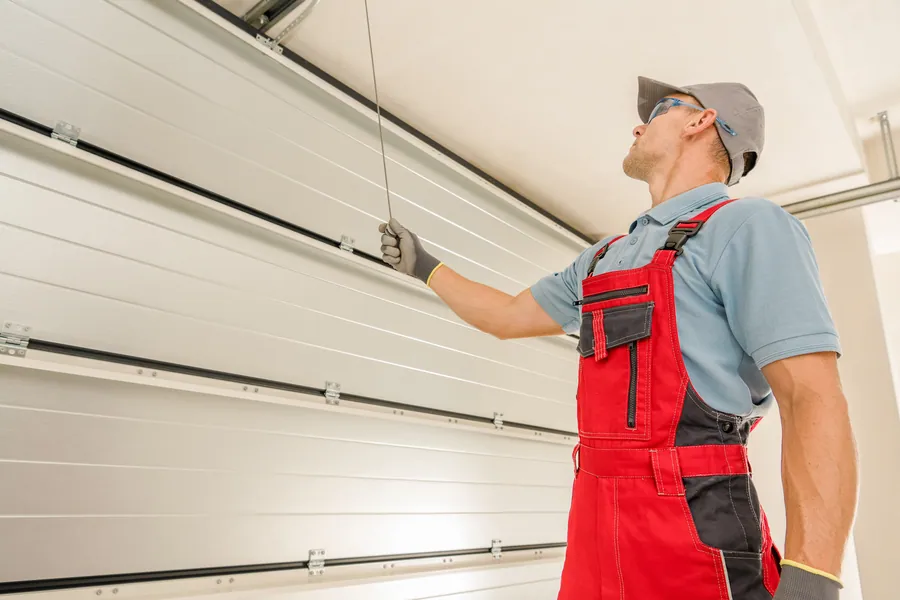
After: Clean garage interior with a white sectional door and opener rail
Before: Worn electric gear motor removed for inspection
Before After
Illustrative comparison using licensed stock photography. It shows the kind of change this service makes and is not a documented customer project.

Repair it or replace it?

We’d rather repair an opener that has good years left. A unit less than ten or twelve years old with a single failed part is nearly always worth fixing.

A few situations tip the other way:

  • It predates 1993. Openers made before then weren’t required to have photo-eye sensors. If yours has no sensors at the bottom of the door, replacing it is a safety matter.
  • Parts are no longer made. Boards for some older models have dried up. Used parts are a gamble.
  • The repair costs most of a new unit. A board plus a gear set plus new sensors on a 20-year-old opener is money better put toward a replacement.
  • You want features it can’t have. Battery backup, phone control, and very quiet DC motors can’t be bolted onto an old AC chain drive.

If replacement makes more sense, our opener installation page walks through the choices. We’ll give you both numbers and you can decide.

About the safety reverse

Every opener sold since the early 1990s has two safety systems, and both should be tested now and then.

The photo-eyes send a beam across the opening a few inches above the floor. Break the beam while the door is closing and it should stop and go back up. Wave a broom through to test it.

The mechanical reverse is the second layer. If the closing door meets resistance, it should reverse. Lay a length of 2x4 flat on the floor under the door and close it. The door should touch the wood and go back up. If it tries to crush the board, the force setting is too high and needs adjusting before the door is used again.

We check both on every opener visit, whether or not that’s what you called about.

Openers and Wisconsin winters

Cold weather is when marginal openers get found out.

Lubricant on the rail and inside the gear housing thickens, so the motor draws more current to do the same work. The door itself gets stiffer for the same reason. An opener whose force was set on a warm afternoon may decide in January that the stiff door is an obstruction, and reverse. The fix is to service the door and rail and then reset the force properly, not to crank the force to maximum.

Low winter sun causes its own mischief. Around the shortest days, sunlight can shine straight into a photo-eye on a west- or south-facing door in the afternoon and blind it. The door refuses to close for an hour, then works fine. Swapping the sender and receiver sides, or fitting a small sun shield, cures it.

Frost heave is the other seasonal issue. Sensor brackets attached to the track can shift a fraction as the slab moves, enough to knock the eyes out of line. If the door won’t close on a cold morning and the sensor light is blinking, a gentle nudge to realign may be all it needs.

Finally, power cuts. Ice storms take out power, and an opener without battery backup leaves you lifting the door by hand. If that’s a concern, it’s worth knowing that many newer openers include a backup battery that handles a number of cycles during an outage.

If the opener is simply loud, our noisy garage door page helps tell opener noise from door noise.

Questions we hear

Garage Door Opener Repair: common questions

Why does my garage door open but refuse to close?

Almost always the safety sensors. Check that both indicator lights are steady and that nothing is in the beam. Holding the wall button down will usually override them long enough to close the door.

How long should an opener last?

Ten to fifteen years is typical, and plenty go longer on a well-balanced door. A door with weak springs can wear one out in half that time.

Can you fix an opener that was hit by a power surge?

Often, by replacing the logic board. If other components were damaged too, we’ll compare the repair cost with a new unit for you.

My remote only works when I’m close to the door. Why?

Start with the remote battery. If that’s fine, try swapping any LED bulbs in the opener for ones labeled as opener-compatible. The antenna wire on the unit should hang straight down.

Do you program remotes and keypads?

Yes, including clearing old codes when you move into a home and setting up vehicle built-in buttons.

Is a loud opener about to fail?

Not necessarily. Chain drives are loud by design. A change in the sound, especially grinding, is the thing to act on.

Estimates for Franklin and nearby

Opener giving you trouble? Tell us what it's doing.

Send the form or call, whichever is easier. Tell us what the door is doing and we'll explain what we'd check first, what the likely fixes are, and what happens next.

(000) 000-0000

We use these details only to reply to your request.

Call